
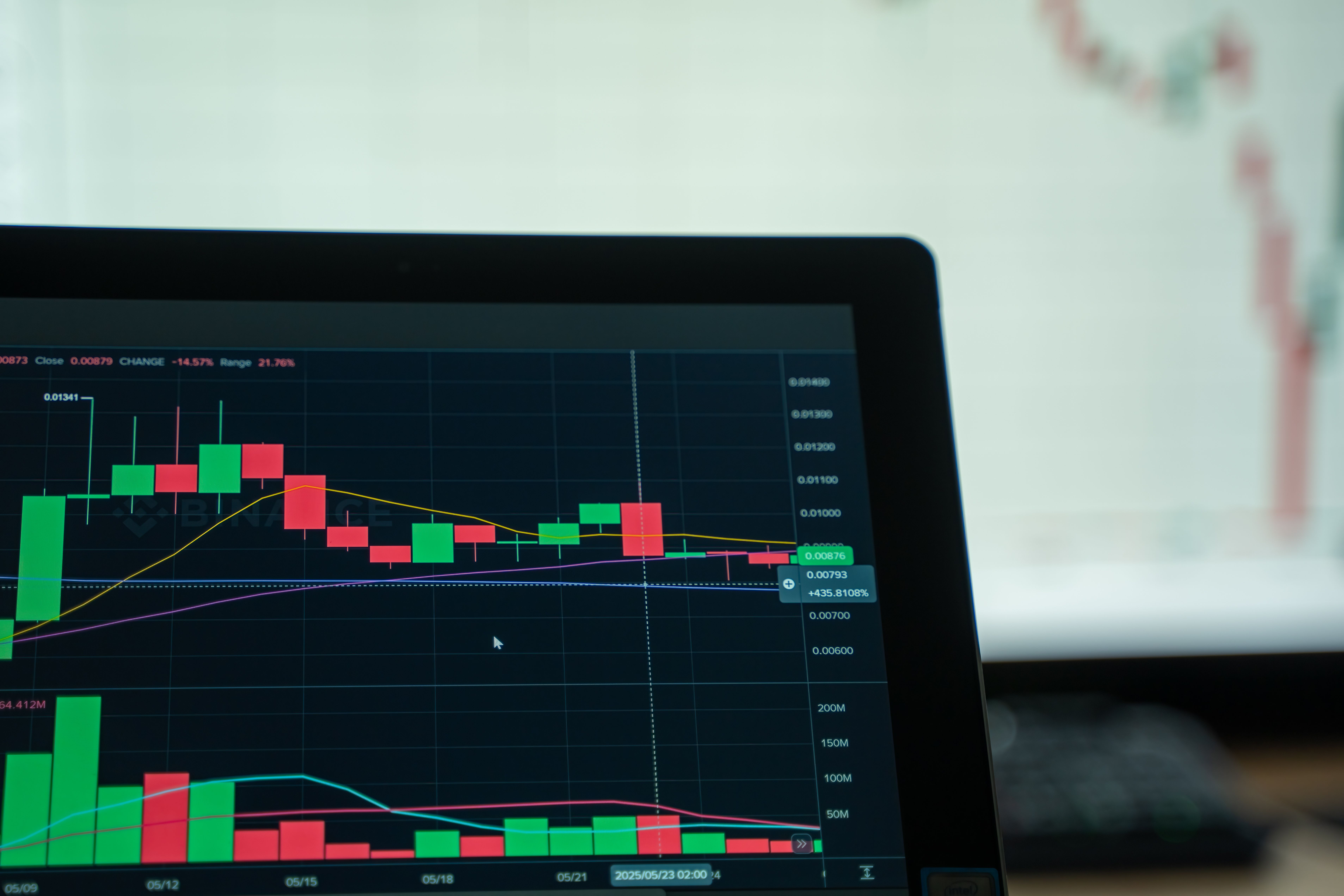
Two assets can receive the same news and move by wildly different amounts. The difference is usually depth: how much size the market can absorb before the price has to shift.
Depth is orders waiting at each price
An order book lists the quantities buyers and sellers are willing to trade at each level. Depth is how much sits within a given distance of the current price.
A deep book has substantial size close to the middle, so a large order is filled without travelling far.
A thin book has small quantities scattered across wide gaps, and the same order consumes several levels before it is complete.
Market orders consume depth as they execute
A market order takes the best available price, then the next, until it is filled. The average price obtained is worse than the first level touched.
That gap is slippage, and it grows with order size relative to the depth available rather than with any absolute quantity.
The same order that barely registers on a major pair can move a smaller market by a wide margin.
Depth is provided by participants who can withdraw it
Most resting orders come from market makers quoting both sides and earning the spread between them.
They face the risk of being filled just before the price moves against them, so they widen quotes and reduce size when volatility rises.
Depth is therefore thinnest precisely when the largest orders arrive, which is why sharp moves accelerate rather than being absorbed.
The same asset has different depth at different times
Liquidity concentrates during hours when the most participants are active, and thins overnight and across weekends.
A position that could be exited comfortably during peak hours may be difficult to move at the same size hours later.
Large moves in crypto markets frequently occur during those quiet periods, because the volume required to produce them is far lower.
Fragmentation divides what is available
The same asset trades on many venues, and depth on one is not available to an order placed on another.
Aggregate figures across all exchanges therefore overstate what any single order can access, unless routing splits it across venues.
Assessing whether a market can absorb a position means looking at the venue where it will actually be traded, at the hour it will be traded.