

Bitcoin Price Forecast Based on Past Market Cycles hundred posts at this point. Some good. Some… let’s call them “learning experiences.” But this topic always pulls me back in. Because market cycles? They’re weirdly comforting. Messy, but predictable-ish. Like my uncle who tells the same story every Thanksgiving but somehow it’s still entertaining.
The First Time I Noticed Cycles (Completely By Accident)
I wasn’t trying to analyze anything. I was just bored.
Scrolling. Zooming out. Zooming out again.
Then I noticed something.
Rise.
Crash.
Flat-ish.
Rise again.
I literally said out loud:
“Wait… this looks familiar.”
I felt like I’d discovered something groundbreaking. Meanwhile, people had been talking about cycles for years. Classic me — showing up late but enthusiastic.
The Halving Thing (Yeah, That Word)
Okay, so there’s this event everyone talks about — the halving. I remember the first time someone explained it to me.
Basically, every few years, the reward for mining Bitcoin gets cut in half. Less new supply. People often think that pushes price up eventually.
But not instantly. Never instantly. Which is annoying.
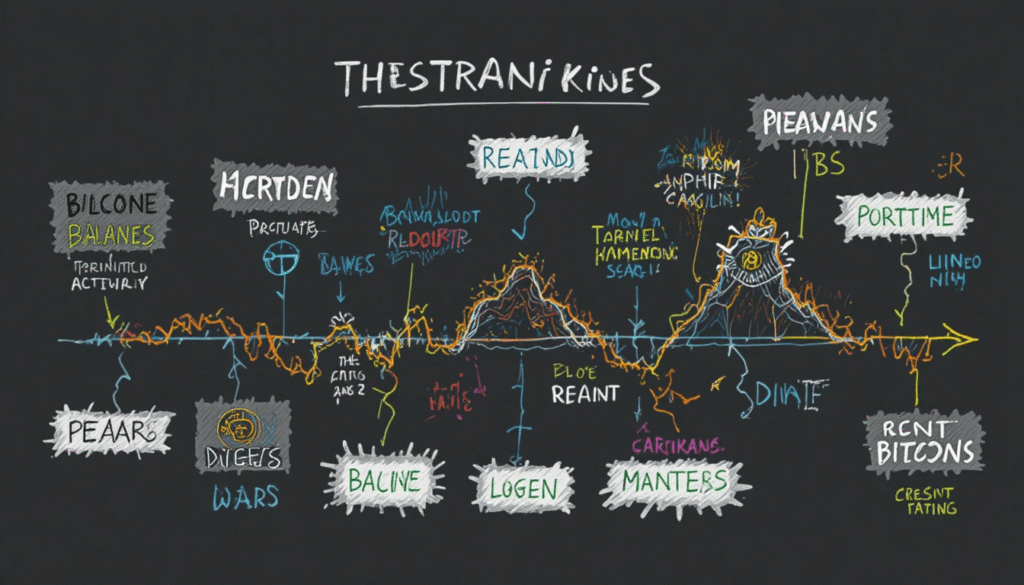
The Pattern People Keep Noticing
Historically:
- Halving happens
- Price slowly wakes up
- Then boom… bull run
- Then chaos
- Then long cooling-off period
It’s like a four-season show. And we’re all guessing which season we’re in.
My Very Scientific Method (Not Really)
When I try to forecast using past market cycles, I do something extremely advanced:
I stare at charts.
That’s it.
Okay, not entirely. I also look at:
- Time between peaks
- Size of previous bull runs
- Length of bear markets
- Market sentiment
But still. Mostly vibes.
Cycle Lengths Are… Kinda Consistent (But Not Perfect)
One thing that jumps out — cycles often take a few years. Not weeks. Not months. Years.
Which is frustrating. Because I want answers now. Like ordering food and checking delivery tracking every 30 seconds.
But markets don’t care about my impatience.
Historically, you’ll see:
- Big run-up
- Big drop
- Long sideways movement
- Then slow recovery
And when you zoom out… it repeats. Not exactly. But close enough to make you suspicious.
The “This Time Is Different” Crowd
Every cycle, someone says:
“This time is different.”
Sometimes they’re right. Things do change. New regulations. ETFs. Big institutions. New tech.
But also… human psychology doesn’t change much. Fear and greed still show up like clockwork.
I remember reading comments during one cycle:
“Bitcoin will never recover.”
Then later:
“Bitcoin going to the moon forever.”
Then… crash.
We’re dramatic. All of us.
Suggested GIF Spot
👉 Insert GIF of someone riding a roller coaster screaming — perfect metaphor for cycles.
Bull Runs Get Smaller? Or Just Feel Smaller?
This part messes with my head. Early Bitcoin cycles had insane gains. Like… ridiculous.
Now? Gains still happen, but they seem less explosive. Or maybe expectations got bigger. Hard to tell.
Some analysts say maturation reduces volatility. Others say we haven’t seen anything yet.
Me? I’m somewhere in the middle. Sitting on the fence. Eating chips.
The Bear Market… My Least Favorite Season
Bear markets drag. They stretch. They test patience.
I once forgot I even owned Bitcoin during one long sideways phase. That’s how quiet it got. No headlines. No excitement. Just… nothing.
But historically, those boring periods often came before recovery.
Which is both encouraging and slightly suspicious.

Why Past Cycles Matter (Even If They’re Not Perfect)
Past market cycles don’t predict the future exactly. But they give context.
It’s like remembering winter comes every year. You don’t know the exact snowfall, but you pack a jacket anyway.
Cycles help set expectations:
- Markets move in phases
- Big growth doesn’t happen nonstop
- Pullbacks are normal
- Recovery takes time
That alone reduces panic. At least a little.
My Friend’s Take (He’s Always Dramatic)
I asked my friend:
“So… you think next cycle will be huge?”
He said:
“Either huge or not huge.”
Thanks. Very helpful.
But honestly? That’s accurate. Forecasting is uncertain. Past cycles guide us, but they don’t guarantee anything.
The Emotional Side of Forecasting
Here’s the truth — forecasting isn’t just math. It’s emotional.
When price rises, forecasts get optimistic.
When price drops, forecasts get gloomy.
Same data. Different mood.
I’ve caught myself doing this. Adjusting expectations based on feelings. Not great. But human.
Suggested Outbound Links
- https://waitbutwhy.com (great long-form thinking pieces)
- https://xkcd.com (for nerdy humor about patterns and predictions)
Zooming Out (My Favorite Trick)
Whenever I get overwhelmed, I zoom out to multi-year charts.
Suddenly:
- Drops look smaller
- Trends look clearer
- Panic looks unnecessary
Perspective changes everything.
I once zoomed out and literally laughed at how stressed I’d been. The dip looked like a tiny blip.
So… What Does the Forecast Look Like?
Based on past market cycles — and again, not financial advice — some people expect:
- Gradual growth after consolidation
- Increased volatility near cycle peaks
- Pullbacks before major moves
- Longer-term upward trend
But markets love surprises. Always have.
My Honest Take (Coffee Shop Version)
I think cycles matter.
But I also think trying to predict exact prices is like guessing how many fries are in a takeout bag. You’ll be wrong. Probably.
Still… I keep checking.
Because there’s something oddly comforting about patterns repeating.
Final Thought (Messy, Like My Notebook)
Bitcoin price forecasting based on past market cycles isn’t about certainty. It’s about perspective. About remembering that chaos often has rhythm. That drops don’t always mean disaster. That boring periods sometimes hide opportunity.